


Is your business using separate apps and software to fulfill your customer relationship management needs? If so, you’re probably spending more time and money managing a complex setup than you’d like, without getting the results you want.
An integrated CRM and marketing automation platform can help you expand and energize your customer relationships. By capturing all of your data in one place, you gain better marketing intelligence to drive new offerings, loyalty programs, and promotions that grow your business. And when your CRM and marketing automation systems are fully integrated, you can take advantage of more advanced progressive profiling and automated workflows to accelerate the sales process and build more loyal customer relationships.
Why Are Sales and Marketing Fusing into One Function?
Today, the traditional lines between sales teams and marketing teams have nearly evaporated, partly because the way customers seek information has changed dramatically in this digital age. Customers expect to find the products and services they want at any given moment, and they expect a similar experience with customer service as well.
As a result, CRM software needs to enable new ways of doing business. This means that today’s CRM platforms must have the functionality to support the entire customer lifecycle at every stage, from acquisition to retention, and across both digital and human interactions in a seamless workflow.
Many small businesses often rely on a pool of software solutions to manage all of their digital marketing and sales operations. But as these operations become more blended and intertwined, a fully integrated CRM and marketing automation platform is required to support all of them with a single point of control.
How Does Marketing Intelligence Work for Small Businesses Without a Data Team?
With an integrated marketing automation and CRM platform, you don’t have to be a data specialist to easily generate powerful insights from all of your data. The key is to capture that information in a closed-loop marketing workflow that provides a single source of truth to help you make deeply informed business decisions and:
- Save time and improve efficiency for every team member by hosting data in one place
- Reduce costs by paying for one platform instead of multiple products
- Shorten your learning curve and your prospect’s sales cycle with a unified, seamless experience
- Increase qualified leads and repeat business by optimizing the customer lifecycle experience
What Does an Integrated CRM and Marketing Automation Platform Actually Do?
|
Capability |
What It Does |
Business Outcome |
|
Capture more leads |
Web forms and landing pages feed visitor data straight into your CRM |
A growing, organized prospect list instead of anonymous website traffic |
|
Automate prospect nurturing |
Pre-built email sequences and reminders trigger based on prospect behavior |
Faster, more consistent follow-up without manual tracking |
|
Improve forecasting and conversion |
Every sales and marketing interaction is tracked in one system of record |
More accurate projections and fewer missed opportunities |
|
Deliver ongoing customer value |
Automated campaigns and check-ins trigger based on purchase history |
Stronger post-sale relationships without added headcount |
|
Retain customers |
Reps always have current data on preferences, history, and upcoming needs |
Higher retention and more repeat and referral business |
How Does Integration Help You Capture More Leads?
Do you have great website traffic but don’t know who your visitors are or how to get them to convert? A great way to find out is to create forms on your website to capture visitor information in exchange for valuable content that you provide. Sound complicated? Not really. Something as simple as offering a newsletter signup can help you stay connected with people who visit your website. However, many small businesses and salespeople overlook simple yet effective tools such as lead capture forms to grow their prospects.
You can use marketing automation software to easily create and add lead capture forms to your website and instantly record that data in your integrated CRM database. This data makes it easy to set up quick follow-ups like phone calls, emails, or nurture campaigns. By capturing this vital information in one place, you’ll be able to track all of your sales and marketing interactions so you can see real-time results and trends across entire campaigns as well as individual prospects and customers.
Read how landing pages can help you capture website visitor information and learn more about lead scoring in this Complete Guide to Lead Management.
How Does Automation Improve Prospect Nurturing and Follow-Up Speed?
Meaningful engagement with your prospects doesn’t just depend on having accurate contact information. You also have to follow up with your leads and deliver the right communication, pricing, or offer at just the right moment. This can be a challenge for any business, but small businesses with limited resources often find it more difficult to manually provide meaningful customer engagement that drives conversions.
Speed matters more than most teams realize. A Harvard Business Review study that analyzed response times across 2,241 U.S. companies found that firms which contacted a new lead within an hour were seven times more likely to have a meaningful conversation with a key decision maker than those who waited even one additional hour. An integrated platform closes that gap automatically instead of leaving it dependent on whoever happens to check their inbox first.
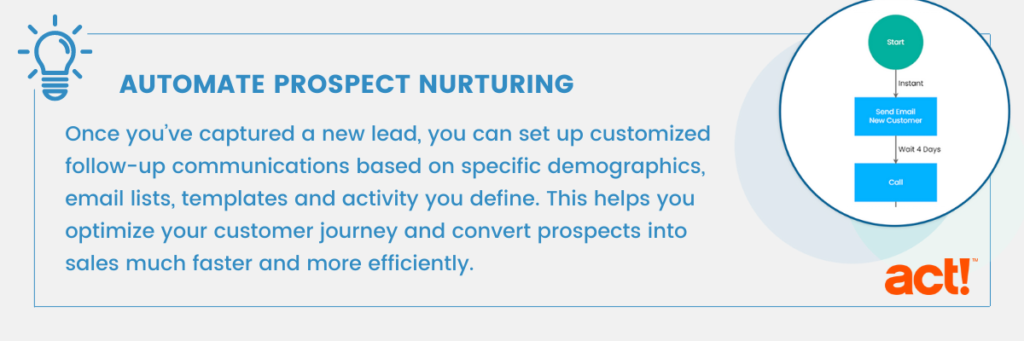
This is where an integrated marketing automation and CRM solution improves your sales and marketing efforts. You simply set up your email marketing campaigns once, and then let the software do the work by:
- Sending prospects the right follow-up messages at the right time
- Providing notifications and reminders when a manual touchpoint is scheduled
- Capturing and tracking engagement in your CRM platform
- Displaying all relevant information in an easy-to-view dashboard
Act!’s AI Writing Assistant adds another layer here, drafting emails, newsletters, and landing page copy right inside the template designer, so nurture sequences get built faster without sacrificing a personal tone.
Without integrated systems and automated workflows, you may be slowing down your sales cycle by spending too much time managing your data instead of finding leads and closing deals. By integrating CRM and marketing automation in one solution, you can send automatic follow-ups based on prospect criteria and activities you customize and fine-tune, helping you nurture leads and convert new prospects through your sales funnel more quickly and efficiently.
Learn how deep customer relationships will help you outperform your competition.
How Does Integration Improve Sales Forecasting and Conversion Rates?
If critical customer data is missing, outdated, or inaccurate, it can lead to poor customer experiences and potentially impact your metrics and sales projections. Without accurate data, you can miss out on vital customer conversion and sales opportunities.
An integrated marketing automation and CRM system lets you track all sales and marketing interactions in one place, from initial contact to every human touchpoint along the way, so you can see real-time results and trends across the individual customer lifecycle as well as your marketing campaigns as a whole. Everyone on your team can act on the most current and accurate information about every customer, whether it’s helping with a service issue, understanding a pain point, or following up on a sales opportunity.
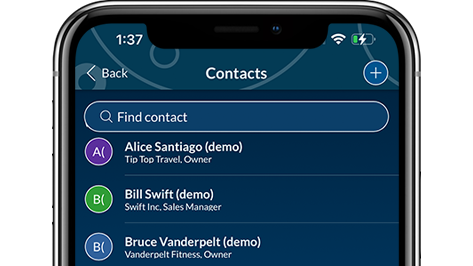
Act!’s AI History Summary reinforces this by instantly surfacing recent interaction summaries, key takeaways, and suggested next steps whenever a rep opens a contact record, so no one has to dig through months of notes before a call.
Check out this 7 Step Sales Process to learn how to improve conversions.
How Do You Deliver Ongoing Customer Value After the Sale?
Once you’ve acquired a customer, it’s important to keep them engaged by delivering exceptional service and relevant communications to let them know you value their business. Marketing automation tools can help you streamline this process by triggering automatic email campaigns, scheduling follow-up phone calls, or sending relevant surveys based on purchase history. Using automation in this way lets you maintain a personalized human connection while fostering your customer relationships.
However, because many small businesses often use a mix of unintegrated sales and marketing solutions, it can be hard to keep track of customers as businesses grow, because these ad hoc systems don’t scale easily. A fully integrated solution grows with you and gives you a 360-degree view of the entire customer lifecycle, enabling you to improve customer experiences over the long term.
Learn more about marketing automation.
How Does Integration Help You Retain Customers and Grow the Business?
Customer data undoubtedly changes over the course of the customer lifecycle. Whether it’s contact information, preferences, or product or service upgrades, you have to make sure your customer service and sales reps always have the most current data at their fingertips to provide the best service and improve customer retention.
For instance, you can use marketing automation to set reminders to contact customers based on certain criteria, such as new products and service offerings. A financial planner can use this capability to ping clients when it’s time for an annual account review. Or perhaps the company wants to generate attendees for a free retirement webinar aimed at current clients and prospects. The planner can target an email campaign to recipients who meet certain criteria, such as age, size of an investment portfolio, and data entered on a lead capture form. After the webinar, sales reps can reach out to attendees to further nurture leads or offer additional investment products and services based on their investment history and financial goals, all captured in the CRM platform.
Read this article to learn about the value of customer retention.
What’s the Bottom Line on Integrated CRM and Marketing Automation?
Ultimately, the goal of integrated marketing automation and CRM is to help your business do more with less. You can more efficiently engage prospects and customers so you don’t have to increase headcount or work longer hours to achieve the same goals.
Act!, recently named a 2026 CRMmys Finalist for Best CRM for Small Business, brings CRM, marketing automation, and built-in AI together in one platform. Ready to experience the benefits of a combined CRM and marketing automation platform? Try Act! free for 14 days.
Frequently Asked Questions About Integrated CRM and Marketing Automation
What does it mean for a CRM and marketing automation platform to be integrated?
It means both systems share one database instead of operating as separate tools that require manual data exports and imports. A lead captured through a marketing form, a sales conversation, and a support ticket all update the same contact record automatically.
How much faster should I respond to a new lead?
As fast as possible. Harvard Business Review research on 2,241 U.S. companies found that responding within an hour makes you seven times more likely to have a meaningful conversation with a decision maker than waiting even one additional hour, which is why automated, immediate follow-up matters.
Can a small business realistically use marketing automation without a dedicated marketing team?
Yes. That’s the point of an integrated platform: automation handles the repetitive parts, like sending follow-ups and logging engagement, so a small team can run processes that would otherwise require dedicated headcount.
Does Act! include AI features for sales and marketing?
Yes. To name a few, Act! includes an AI Writing Assistant for drafting emails, newsletters, and landing page content, and an AI History Summary and analysis that surfaces interactions, key takeaways, and suggested next steps on any contact record.
How does an integrated platform improve sales forecasting?
By tracking every sales and marketing interaction in one system, forecasts are based on complete, current data rather than fragments scattered across separate tools, which reduces the blind spots that come from missing or outdated customer information.
What’s the biggest risk of using separate, unintegrated sales and marketing tools?
Data gets stuck in silos. Without integration, teams spend time exporting and importing lists between platforms that don’t talk to each other, which slows down follow-up and makes it easy for leads to fall through the cracks as the business grows.