



Every day, hundreds of billions of emails are sent, and nearly half of them are spam. Inbox providers like Gmail, Outlook, and Yahoo work hard to block unwanted messages, while making sure legitimate ones reach the inbox. For marketers, the challenge is clear: your emails must stand out as both wanted and expected, while also meeting strict technical and compliance standards.
That’s where email deliverability comes in. Deliverability is more than just whether your email gets sent, it’s whether it lands in the inbox instead of the spam folder. At the heart of deliverability is your sender reputation, a measure of your trustworthiness that inbox providers use to decide whether your next message gets through.
Understanding Sender Reputation: Your “Credit Score” for Email
Think of sender reputation as a credit score for your email programme. Just like a financial credit score, it’s easier to maintain than repair, and if your score drops, providers may block or filter your messages regardless of how good your content is.
Inbox providers evaluate you based on factors like:
- Spam Complaints: When recipients click “Spam” or “Junk.”
- Hard Bounces: Sending to invalid or expired email addresses.
- Spam Traps: Addresses designed to catch senders using bad data sources (pristine, recycled, or typo traps).
- Engagement: Low open or click rates signal that your emails aren’t wanted.
- Content Blocks: Messages flagged for spammy keywords or bad link reputation.
- Sending Volume Patterns: Sudden spikes or irregular activity can look suspicious.
- Technical Compliance: Missing or misconfigured SPF, DKIM, and DMARC authentication.
Because each inbox provider measures sender reputation differently, and because there’s no central reporting hub, monitoring and managing it proactively is essential.
Three Pillars of Strong Deliverability
Your sender reputation is shaped by three main areas, and all must be handled well for consistent inbox placement.
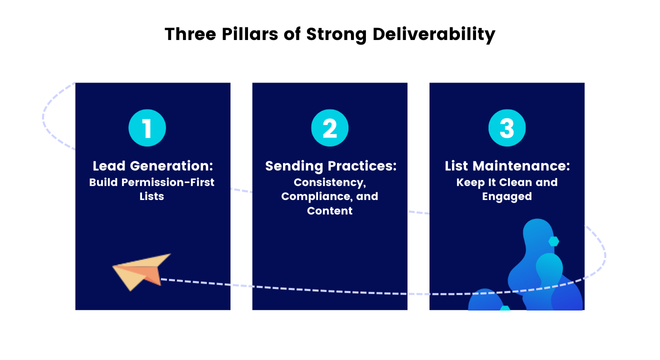 1. Lead Generation: Permission-First List Building
The foundation of a healthy sender reputation is a high-quality, permission-based list.
Best Practices:
- Explicit Permission Only: Consent must be freely given, specific, informed, and unambiguous. No pre-ticked boxes, no “implied” permission, and no purchased lists.
- Double Opt-In (Strongly Recommended): Confirm each subscriber’s intent by sending a verification email before adding them to your marketing list.
- Set Clear Expectations: Tell subscribers what you’ll send, how often, and who it will come from.
- Avoid Role-Based Addresses: Addresses like info@ or sales@ are often shared and may generate spam complaints unless explicitly opted in.
2. Sending Practices: Content, Compliance, and Consistency
Once you’ve built a high-quality list, protect it, and your reputation, with smart sending habits.
Best Practices:
- Authenticate Your Emails: As of February 2024, Gmail and Yahoo require bulk senders to have SPF, DKIM, and DMARC set up. Without these, your emails may be rejected.
- Meet Subscriber Expectations: Stick to the promised content and frequency. Notify users before making significant changes.
- Segment Your Audience: Send relevant, targeted content based on preferences, demographics, or engagement.
- Write Honest Subject Lines: Avoid clickbait or misleading language.
- One-Click Unsubscribe: Bulk senders must now include an easy one-click unsubscribe link in the email header.
- Stay Compliant: Follow GDPR, PECR, and any other applicable laws.
- Optimise Content for Deliverability: Maintain a balanced text-to-image ratio, avoid spam trigger words, and ensure mobile-friendly design.
3. List Maintenance: Keep It Clean and Engaged
Inactive or invalid addresses can sink your deliverability, even if your content is good.
Best Practices:
- Monitor Engagement Closely: Consider re-engaging or removing inactive contacts after 90 days of no opens or clicks (not six months, as older advice suggested).
- Remove Hard Bounces Immediately: Invalid addresses harm your reputation.
- Clean Out Spam Traps: Regularly validate your list to catch outdated or risky addresses.
- Don’t Revive Old Lists: Permission degrades over time; if you haven’t emailed a list in 6+ months, treat it as new and re-opt in subscribers.
Troubleshooting Deliverability Issues
Even the best senders can run into problems. When an email doesn’t land where you expect, the issue typically falls into one of three categories:
- Not Sent: The email never left your sending system (e.g., suppression, automation timing issues).
- Not Delivered: The email bounced due to an invalid address, poor reputation, or technical block. Check bounce codes to identify the cause.
- Not in the Inbox: The email was delivered but filtered to spam. Common causes include content issues, engagement patterns, or authentication problems.
Pro Tip: Use tools like Google Postmaster Tools, Validity, or MXToolbox to monitor sender reputation, bounce rates, and spam complaint trends. Set up feedback loops with mailbox providers to catch problems early.
Deliverability Checklist
Before every campaign, confirm:
- SPF, DKIM, and DMARC are correctly configured.
- All contacts have given explicit, documented permission.
- Content is relevant, mobile-friendly, and free of spam triggers.
- Engagement metrics are healthy; inactive contacts are segmented or removed.
- One-click unsubscribe is enabled and visible.
- Sending volume is consistent with past patterns.
Final Word
Email deliverability isn’t static, it’s a moving target shaped by evolving inbox provider rules, subscriber behaviour, and technical requirements. By building permission-based lists, authenticating every send, monitoring engagement, and staying current with regulations, you’ll build the trust that gets your emails where they belong: in the inbox.
A trusted sender is a successful sender. Make every email both wanted and expected and watch your deliverability, engagement, and ROI rise together.