
TL;DR
A sales pipeline visually tracks every deal from first contact to closing, giving small businesses clarity on which opportunities are active, their stage, and the next action needed. Unlike a sales funnel (customer’s perspective), the pipeline reflects your sales team’s process.
Why it’s essential:
- Keeps sales organised and predictable.
- Helps allocate the right people to the right stages.
- Improves sales forecasting for monthly/quarterly revenue.
- Supports tailored sales strategies for each stage.
- Strengthens customer relationships for repeat sales.
Main stages: Initial Contact → Qualification → Meeting/Demo → Proposal → Closing.
Steps to Build a Sales Pipeline:
- Identify your ideal buyers and qualify leads.
- Define clear, customised sales stages.
- Set activities and rules for each stage.
- Nurture leads until they close.
- Maintain relationships for cross-sells and upsells.
- Keep feeding the pipeline with new qualified leads.
- Continuously monitor and refine the process.
Best practices: Keep it updated, focus on quality leads, clean out dead deals, automate follow-ups, and monitor performance.
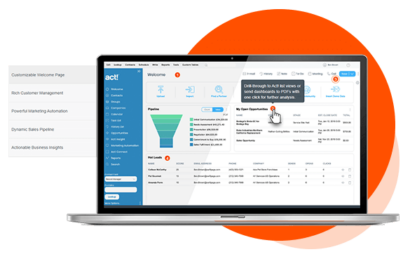
Act! CRM makes this easier with real-time dashboards, automated actions, lead scoring, analytics, and integrated marketing tools; helping you close more deals, spot upsell opportunities, and never let a lead slip through the cracks.
If you don’t know exactly how many deals are in progress, which ones are close to closing, and which ones need follow-up, you’re guessing, not selling.
Guessing results in missed opportunities, unpredictable revenue, and slower growth. For consistent, predictable sales, you need clarity at every stage of your prospect’s journey with your sales team.
A sales pipeline gives you that clarity. It shows every step a prospect takes from first contact to becoming a customer, so you can stay on top of each deal and focus on the ones most likely to close.
In this guide, we’ll explain why an active sales pipeline is essential for small businesses, how it’s different from a sales funnel, and the best ways to manage yours.
What is a sales pipeline?
A sales pipeline is a visual representation of the deals your business is working on. It lays out each stage a prospect goes through from the first time they show interest to the moment they become a paying customer.
At a glance, you can see where every opportunity stands, what actions are next, and how close you are to hitting your sales targets.
For a small business, an effective sales pipeline can be the difference between steady growth and missed opportunities. Small businesses are often stretched for resources, and they can’t afford to waste leads. A pipeline gives you transparency into every deal so you can make sure no opportunity slips through the cracks.
For example, the sales pipeline lets you see all your opportunities in one place. If you’re a real estate broker, you could track every potential customer from initial inquiry to property viewing, offer, and final closing.
You can instantly see which clients are ready to make a purchase decision, which ones need a follow-up call, and which ones aren’t a good fit, all without digging through emails or scattered notes.
That’s the power of a sales pipeline: clarity, focus, and a chance to close more deals with less effort.
How a sales pipeline works: The main stages
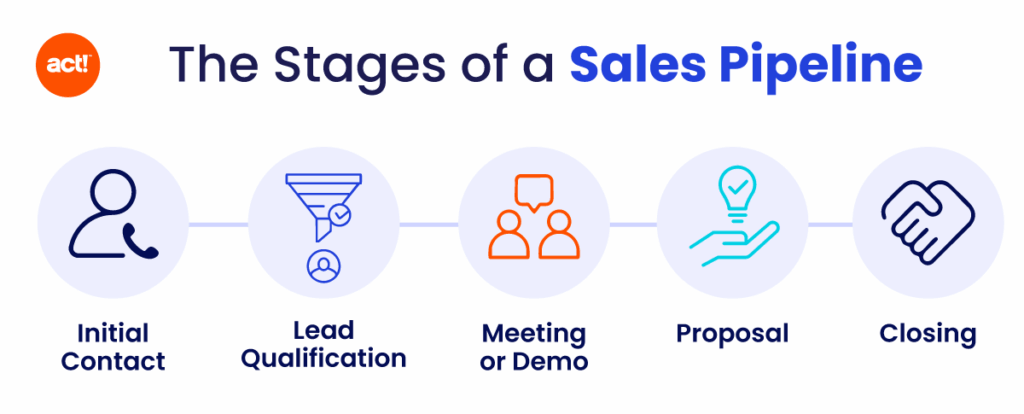
A sales pipeline is your sales process laid out in steps. Each stage shows how far a prospect has come in the sales cycle and what needs to happen next to move them closer to conversion.
Here are the different stages of a sales pipeline:
- Initial contact: A lead comes in through a call, email, event, ad, or referral.
- Lead Qualification: The team checks if they’re a good fit by confirming budget, needs, and timing.
- Meeting or demo: The salesperson presents the solution, answers questions, and handles objections.
- Proposal: A formal offer is sent with pricing, terms, and details.
- Closing: The customer signs and becomes a client.
With customer relationship Management (CRM) software, salespeople update each deal’s stage as it progresses. This not only keeps their own work organised but also gives managers and teammates real-time visibility into what’s happening across the sales process.
Here’s how a sales pipeline practically impacts your small business sales workflow.
- Stage updates trigger actions: When a salesperson moves a lead from “Qualification” to “Meeting/Demo”, it triggers the next step in the standard operating procedure (SOP). For example, the account executive gets an automatic task to prepare the presentation, while a sales assistant schedules the meeting.
- Clear handoffs between team members: If a lead moves into the “Proposal” stage, another team member may be assigned to draft the proposal or confirm terms. Everyone knows their role without back-and-forth emails because the CRM assigns and tracks tasks automatically.
- Manager-level visibility: The sales manager can open the pipeline dashboard at any time and see exactly how many leads are in each stage, which ones are close to closing, and which ones need more work. When upper management asks for a sales forecast, the manager can confidently share how many deals are likely to close this month and what revenue to expect.
- Better forecasting and resource planning: Because the pipeline is always up to date, it’s easier to predict future sales, allocate the right resources, and spot bottlenecks early. This clarity is critical for small businesses, where missing even a few deals can impact the bottom line.
How a sales pipeline facilitates upselling and cross-selling
A sales pipeline doesn’t stop being useful once a deal is closed. The same structure that helped you move a prospect from initial contact to closing can also help you spot and manage opportunities for upselling and cross-selling.
- Upselling means encouraging a customer to choose a higher-value option, like a premium version or upgraded package of what they’ve already bought.
- Cross-selling means offering related products or services that complement their purchase.
Here’s how the sales pipeline helps:
- When a customer reaches the closing stage, you can create a new opportunity in your pipeline, after onboarding, for an upsell or cross-sell based on their needs.
- These new opportunities go through the same stages of a pipeline, but with an existing customer who has already been onboarded already trusts your business.
- Since your sales team already understands the customer’s needs and problems, your dedicated upsell team can identify profit-maximisation opportunities.
- Because everything is tracked in the CRM, your team knows exactly who owns the next step, when to follow up, and what offers have already been discussed.
For example, a digital web solutions company might close a deal with a business to redesign its website. But once that project is complete, they can upsell SEO services, social media marketing packages, and even hands-off website management to handle the brand’s entire web presence.
This is only possible because the CRM’s records, based on previous interactions, reveal exactly what motivated the client to get the site redesigned in the first place.
Sales pipeline vs. sales funnel: Complementary pieces
If you’re new to sales, “pipeline” and “funnel” might sound like two ways to say the same thing. But knowing the difference will make you better at managing leads.
A sales funnel shows the customer’s journey from the moment they first hear about your business to the moment they buy. Think of it as the customer’s perspective. It’s called a funnel because the number of people gets smaller at each stage. Many start at the top, but only a few make it to the bottom.
Typical sales funnel stages include:
- Awareness: The prospect first learns you exist. This could be through ads, social media, word of mouth, or search results.
- Interest: They show curiosity about what you offer, like visiting your website, reading a blog post, or attending a webinar.
- Consideration: They actively compare your solution to others, read reviews, or request more details.
- Decision: They’re ready to buy and are deciding between final options.
- Action: They make the purchase (or in some cases, choose not to).
A sales pipeline, on the other hand, shows the actions your sales team takes to turn a prospect into a customer. It’s the salesperson’s perspective. The pipeline is made up of your internal sales stages, such as lead qualification, meeting, proposal, and closing, and tracks exactly where each deal is right now.
In short:
- Funnel= Customer’s path to buying.
- Pipeline= Your sales team’s plan to get them there.
Struggling to convert?


How sales funnels and pipelines work together
The funnel tells you how many prospects you have at each stage from the customer’s point of view. The pipeline tells you what your sales team needs to do next to move each of them toward a purchase.
For example, in your funnel, you might see that 200 people are in the Awareness stage, 60 have shown Interest by booking a demo, and 20 are in the Decision stage. In your pipeline, those 20 high-intent leads are in stages like “Meeting/Demo” or “Proposal,” with assigned actions such as follow-up calls, sending proposals, or negotiating terms, to move them to “Closing.”
Why an active sales pipeline is important for your small business
One of the biggest struggles many small businesses face is not having clarity in the sales process (not knowing how many prospects they have, or where their next sale is coming from). On top of that, small businesses are usually stretched for resources.
A sales pipeline gives your sales team clarity, focus, and control in more ways than one.
- Give your sales team direction: Show exactly which deals they own, what stage they’re in, and the actions needed to move them forward.
- Create dedicated teams for each stage: Assign the right people to lead generation, mid-stage nurturing, or closing deals.
- Predict monthly and quarterly sales: Track deal volume, value, and close likelihood for accurate revenue forecasts and better planning.
- Build tailored strategies for each stage: Match the right actions to each stage to boost conversion rates.
- Support stronger customer relationships: Keep full context of every interaction to follow up at the right time with the right message.
How to build a healthy sales pipeline from scratch
A healthy sales pipeline keeps deals moving, removes dead leads, and helps you focus on the opportunities most likely to close. If you’re starting from scratch, follow these steps to structure your pipeline, maintain momentum, and hit your sales targets consistently.
1. Identify and list your ideal buyers
The first step is to know exactly who you’re targeting so you don’t waste time chasing bad leads.
Here’s what to lock in:
- Their main pain points you can solve
- Their budget
- Their authority
- Purchase timeline they follow
Put every qualified lead into your CRM. Turn on lead scoring to instantly rank them by likelihood to buy. Stick to proven sources like LinkedIn, industry events, past customers, and referrals to keep your pipeline healthy.
2. Define your sales pipeline stages
The second step is to break your sales process into clear, measurable stages that match how you actually sell. Your pipeline stages should fit your business model, product complexity, and lead sources.
Here’s what to do:
- Map your real process, from first contact to closed deal.
- Remove any stage that doesn’t add value or move deals forward.
- Adapt to your industry (e.g., a real estate pipeline might swap “Sales Call” for “House Viewing”).
- Keep stage names simple so your team knows exactly what they mean.
Customise these stages so they reflect your real-world sales flow.
3. Set activities and rules for every stage
The third step is to make your pipeline actionable by deciding exactly what happens in each stage and what conditions must be met before moving a deal forward. This keeps your team focused and ensures no stage becomes a dead end.
- List specific tasks for each stage (e.g., send a proposal, hold a demo, schedule a follow-up).
- Define clear conditions for moving forward (e.g., lead meets all criteria, proposal acknowledged).
- Match sales activities to strengths by assigning the right team members to each stage.
- Use automation to trigger the next steps automatically when a deal advances.
This approach turns your pipeline into a clear checklist your team can follow, keeping deals moving and opportunities alive.
4. Nurture leads until they close
Most prospects won’t buy after the first conversation. They need time, trust, and repeated value before saying yes. Your job is to keep them engaged without letting them go cold.
Here’s how:
- Use email sequences to send valuable content like blogs, videos, or case studies.
- Follow up with calls or quick check-in messages.
- Share insights that solve their specific challenges.
- Stay visible through social media engagement.
- Automate reminders and follow-ups so no one slips through the cracks.
Consistent, value-driven contact keeps your solution top of mind and steadily moves leads toward a close.
5. Maintain relationships for cross-sells and upsells
Closing a deal is the start of a longer revenue opportunity. Stay in touch with new customers so you can spot chances to sell complementary products or premium upgrades.
- Check in regularly to ensure they’re happy with your solution.
- Share tips, updates, or new features they’ll find useful.
- Offer upgrades or add-ons that genuinely improve their results.
- Track past purchases and spot upsell opportunities automatically.
This ongoing engagement turns one-time buyers into long-term revenue sources.

“By managing the pipeline as a true reflection of your sales process, you strengthen customer relationships and unlock repeat and upsell opportunities. Tools like Act! CRM simplify this process with real-time dashboards, automation, and analytics—ensuring no lead is missed and more deals are closed consistently.”
Duston Santana, VP Sales | Act!
6. Best practices for managing your sales pipeline
An active sales pipeline works best when it’s well-maintained. For small businesses, that means keeping it updated, organised, and easy for your team to use every day.
Here’s how to get the most out of it.
- Update your sales pipeline as soon as there’s progress to maintain accuracy and prevent missed follow-ups.
- Define clear stages and criteria so everyone knows exactly when a deal is ready to move forward.
- Focus on quality leads by tracking sources and prioritising prospects that match your ideal customer profiles and personas.
- Review and clean your pipeline regularly to remove dead deals and keep forecasts realistic.
- Automate follow-ups to save time and ensure no lead slips through the cracks.
- Monitor performance and adjust your strategy to optimise close rates and deal velocity.
How Act! can enhance your sales pipeline
You can’t keep a sales pipeline healthy, let alone grow it, without the right tools. Act! is built to help you avoid the most common pipeline management challenges small businesses face:
- Shirking pipelines: Leads get neglected when you’re working with outdated tools. Act! automatically stores prospect data, tracks activity, and alerts your team when new leads enter the pipeline so nothing slips through the cracks.
- Congestion: Dead or inactive deals can skew your sales forecasts. Act! monitors engagement and flags inactive prospects so you can clean up your pipeline and keep forecasts accurate.
- Losing leads: Missed follow-ups cost money. Act! automates follow-up actions and works with your marketing teams to keep prospects warm until they convert or are moved out of the pipeline.
With these safeguards in place, Act! not only gives you essential pipeline management but also integrates CRM and marketing automation features for a complete sales solution.
Here’s how the platform helps you manage and grow your sales pipeline.
- Dynamic sales pipeline management: Customise your sales process or use templates, track every deal visually, and update stages anytime to keep your pipeline aligned with your sales goals.
- Instant dashboard view: See your full pipeline in real time, spot deals near closing, and prioritise follow-ups for faster wins.
- Centralised, auto-updated stages: Every stage change updates instantly for the whole team, keeping everyone aligned and eliminating confusion.
- Automated actions by stage: Trigger proposals, calls, or tasks automatically when deals move to the next stage.
- Convenient lead scoring: Rank leads by engagement, deal size, or close likelihood to focus on the most valuable prospects first.
- Deeper insights with analytics: Track close rates, spot stalled deals, and see which sales reps and strategies drive the most revenue.
- Automated customer communication: Send timely, personalised follow-ups without manual sales effort to keep leads warm and engaged.
- Lead generation with landing pages: Capture prospects directly into your pipeline with branded landing pages ready for follow-up.
Frequently asked questions
Aim for three to five times your monthly sales quota in active opportunities.
Review weekly to keep it accurate and spot stalled deals early.
Use lead scoring to focus on the highest-fit, most engaged prospects.
Typically one to three weeks; longer means it’s time to follow up or drop them.
Follow a set outreach schedule and share valuable, relevant content.
Want to learn more? Check out these related resources:


Articles

Guides
To experience how Act! simplifies pipeline management, try it free today.
Why does your sales team need a CRM?